I Quit Something I Actually Enjoyed. Here's What I Found.
Feb 25, 2026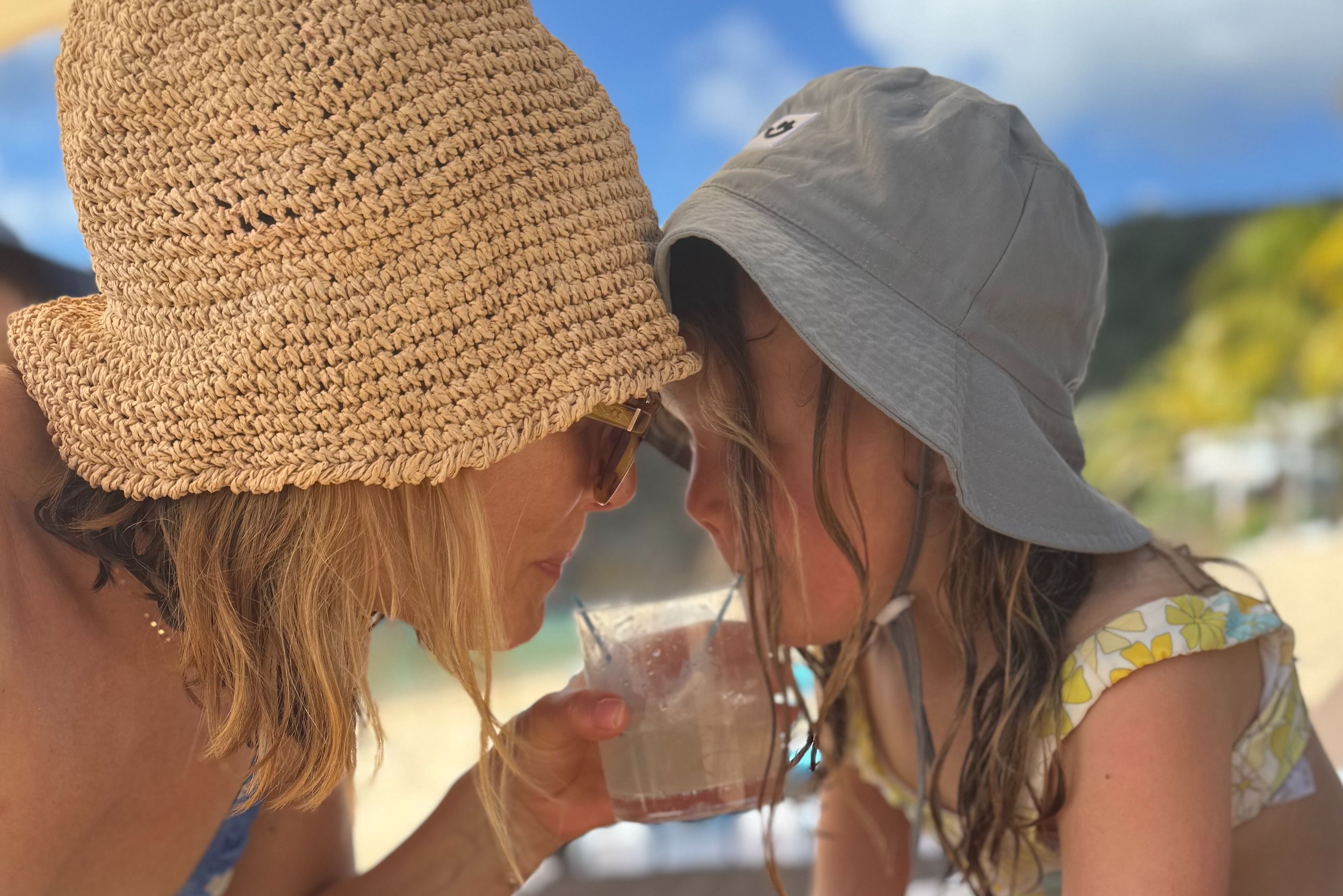
I want to be clear about something upfront: I love a good drink.
A cold tequila. A glass of something interesting at a long dinner. The French way of doing it — unhurried, intentional, paired with good food and friends. Drinking was never a requirement. It was a ritual of pleasure, and I liked it that way.
But even when something is good, it's worth asking whether it's actually adding what you think it is.
When my life got very loud during Tijn's leukemia treatment, I noticed something. Alcohol wasn't softening anything; it was just making everything louder when I desperately needed quiet.
So in December 2024, I stopped. No rock bottom. No grand announcement. No plan to never touch a glass again. I just wanted quiet.
She showed up without it.
Here's what I expected: some version of a revelation. The glowing skin, the clear eyes, the "I can't believe I ever drank" moment I've heard other people describe. It didn't happen like that.
What happened was quieter. I found myself out late at a work conference recently - the kind of night I've always loved, good people, real conversation, staying up too late - and I was completely in it. Sharp, present, laughing loudly.
The night was exactly what it always was. I just wasn't paying a tax on it the next morning. That was the whole surprise. Not a transformation. Just the same good night, kept.
The part nobody tells you.
Nobody warned me that the benefits wouldn't arrive like a before-and-after. There was no morning I woke up and thought this is it, this is the transformation. It was subtler than that, and more permanent.
The 3am anxiety I'd been blaming on my to-do list? Chemistry. Alcohol suppresses cortisol for a few hours, then your body overcompensates with a spike right as the drink wears off. I was gifting myself a middle-of-the-night anxiety spiral every time I tried to unwind.
The morning fog I'd accepted as just being who I was? Alcohol disrupts REM sleep - the stage where your brain actually repairs itself. Without it, I don't feel transformed. I just feel like myself. Earlier, and more reliably.
The energy I kept waiting to find? It was never missing. It was just being quietly taxed.
None of this required a problem to be true. It's just physiology.
The part that's actually hard.
I want to be honest about what I haven't figured out yet, because most pieces like this skip this part entirely.
The social awkwardness is mostly in your own head, but that doesn't make it nothing. The first few events I found myself hyperaware of what was in my hand, who might notice, whether I seemed like I was making a statement. Nobody cared. It was entirely a conversation I was having with myself. Once I realized that, it mostly dissolved.
What's been harder to untangle is the social dynamic shift. Something changes when you're not drinking and others are, and I still don't fully understand why. It's not that anyone treats you differently exactly. It's more like a subtle frequency you're no longer on. And sometimes - and this one stings a little - you notice you're being included less. The impromptu "come for a drink" invite that doesn't come. The after-dinner thing you hear about later. Nobody's being malicious. But alcohol is apparently more social infrastructure than any of us realized, and opting out has a quiet cost that nobody warns you about.
Then there's this: Tijn and I have talked about missing that lighthearted, carefree feeling we used to have together. But when I'm honest with myself, I have to ask - was that the wine, or was that life before cancer twice and two toddlers? I genuinely don't know. And I think that's worth naming, because I suspect I'm not the only one who has quietly wondered whether the drink was ever really the point, or whether it was just present during the good times.
And practically: I have not found a mocktail I love. Beer without alcohol is actually fine. Everything else tastes like expensive juice. If you've cracked this, please tell me.
A few things that actually helped.
Order something that feels like a drink. Sparkling water with lime in a rocks glass. Half of the ritual is just having something to hold.
Give yourself the first twenty minutes. The awkward window is real but it's short. Once you're in conversation, you forget entirely. The discomfort lives in the anticipation more than the event.
Find your people early. At any event there are people who are also not drinking, drinking slowly, or genuinely don't care either way. Gravitate toward them first before you're in the middle of a loud group doing shots — and yes, I've been the one rallying that group.
Let it be unremarkable. You don't have to explain or announce. "I'm good with this" while gesturing at your glass is a complete sentence. Most people are far more focused on themselves than on what's in your hand.
You don't have to make it a thing.
I'm still not into labels or forever proclamations. I'm still the person who appreciates a great tequila. But I'm much more interested now in the question underneath: what am I actually reaching for?
If the answer is genuine pleasure - the French way, the slow savoring of something worth tasting - that's one thing. But if the answer is something else, that's worth knowing. Because whatever you're actually reaching for, there's probably a more direct route.
You don't need a reason to be curious. And you don't need a problem to wonder what's waiting on the other side of one honest morning-after.
A note worth saying clearly: this piece is written from the perspective of someone who enjoyed drinking socially and made a personal choice to stop. If your relationship with alcohol feels more complicated than that — if stopping feels impossible rather than just unfamiliar — that deserves real support, not a blog post. The SAMHSA helpline (1-800-662-4357) is free, confidential, and a genuinely good place to start.
Stay connected
Sign-up for a mix of honest insights, tips, and stories delivered to you each week via Your Weekly Boost.
We hate SPAM. We will never sell your information, for any reason.